Introduction
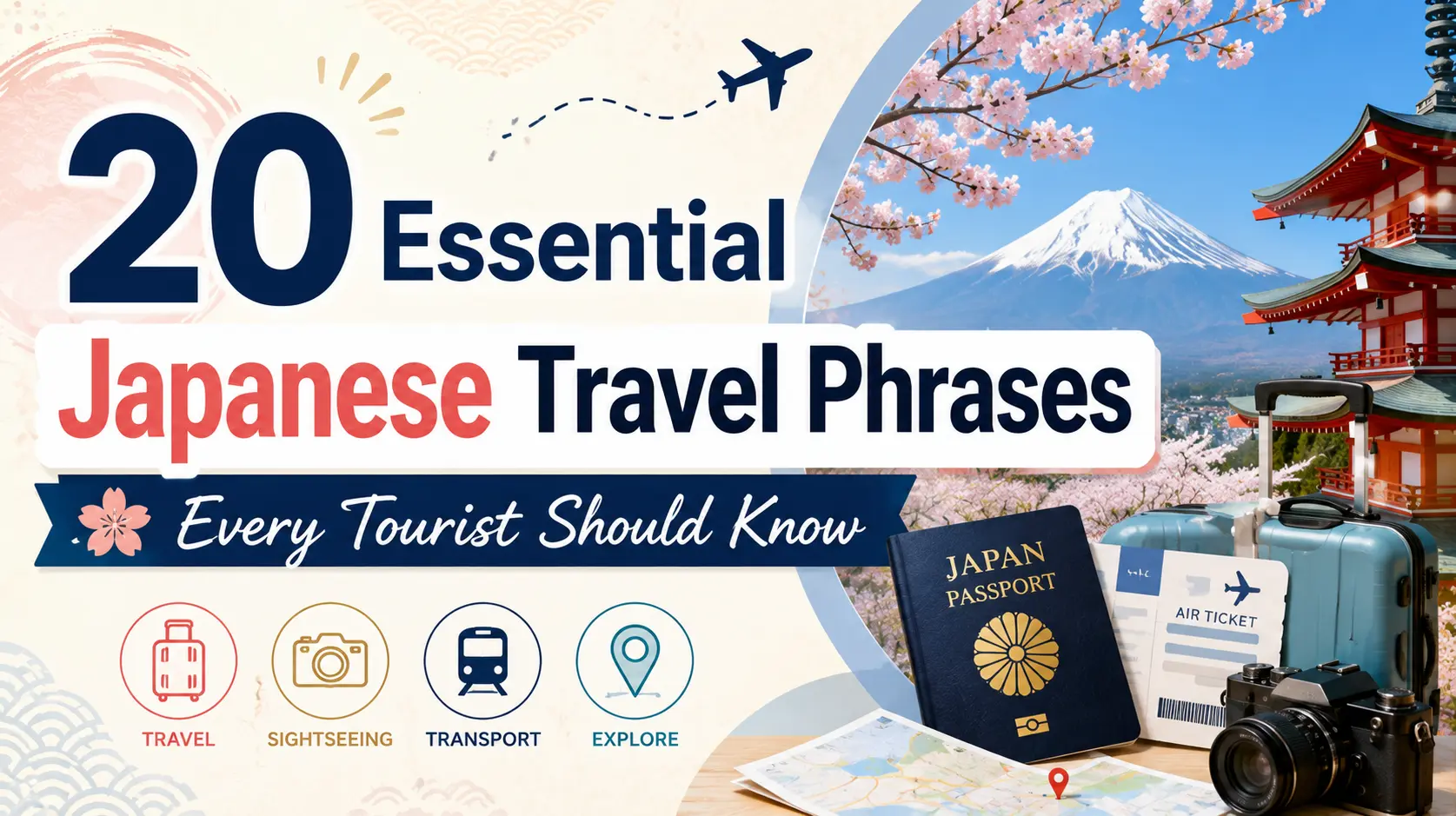
Knowing a few Japanese travel phrases can make a major difference during a trip to Japan. You do not need to speak fluent Japanese to order food, ask for directions, check into a hotel, or buy a train ticket.
Many people working in popular tourist areas can communicate in simple English, but this is not guaranteed. A short Japanese phrase can help you communicate more clearly and show respect for the person helping you.
The phrases in this guide are useful in stations, restaurants, hotels, shops, taxis, tourist attractions, and everyday situations. They are suitable for complete beginners and approximately JLPT N5 level.
You will learn what each phrase means, how to pronounce it, when native Japanese speakers use it, and how it sounds in a realistic conversation.
Understanding Japanese Travel Phrases
Japanese communication often places importance on politeness and context. Travelers do not need to master complex honorific language, but polite sentence endings such as です, ます, and お願いします are helpful.
When asking a stranger or staff member for help, beginning with すみません makes your request sound softer and more respectful. It works much like “Excuse me” in English.
Japanese speakers also rely heavily on context. You can point to a menu, ticket machine, map, address, or product while using a simple phrase such as これをください. Clear gestures and short polite phrases are often more effective than trying to create a long sentence.
Beginners should first memorize すみません, ありがとうございます, これをください, トイレはどこですか, and 日本語があまり話せません. These expressions cover many common travel situations.
Use polite forms with station staff, hotel employees, restaurant workers, shop staff, drivers, and strangers. Casual Japanese is useful with friends, but polite Japanese is the safest choice while traveling.
20 Essential Japanese Travel Phrases
The following 20 phrases were selected for practical travel situations. Each expression is common, beginner-friendly, and useful when visiting Japan.