
20 Essential Japanese Greetings Every Beginner Should Know
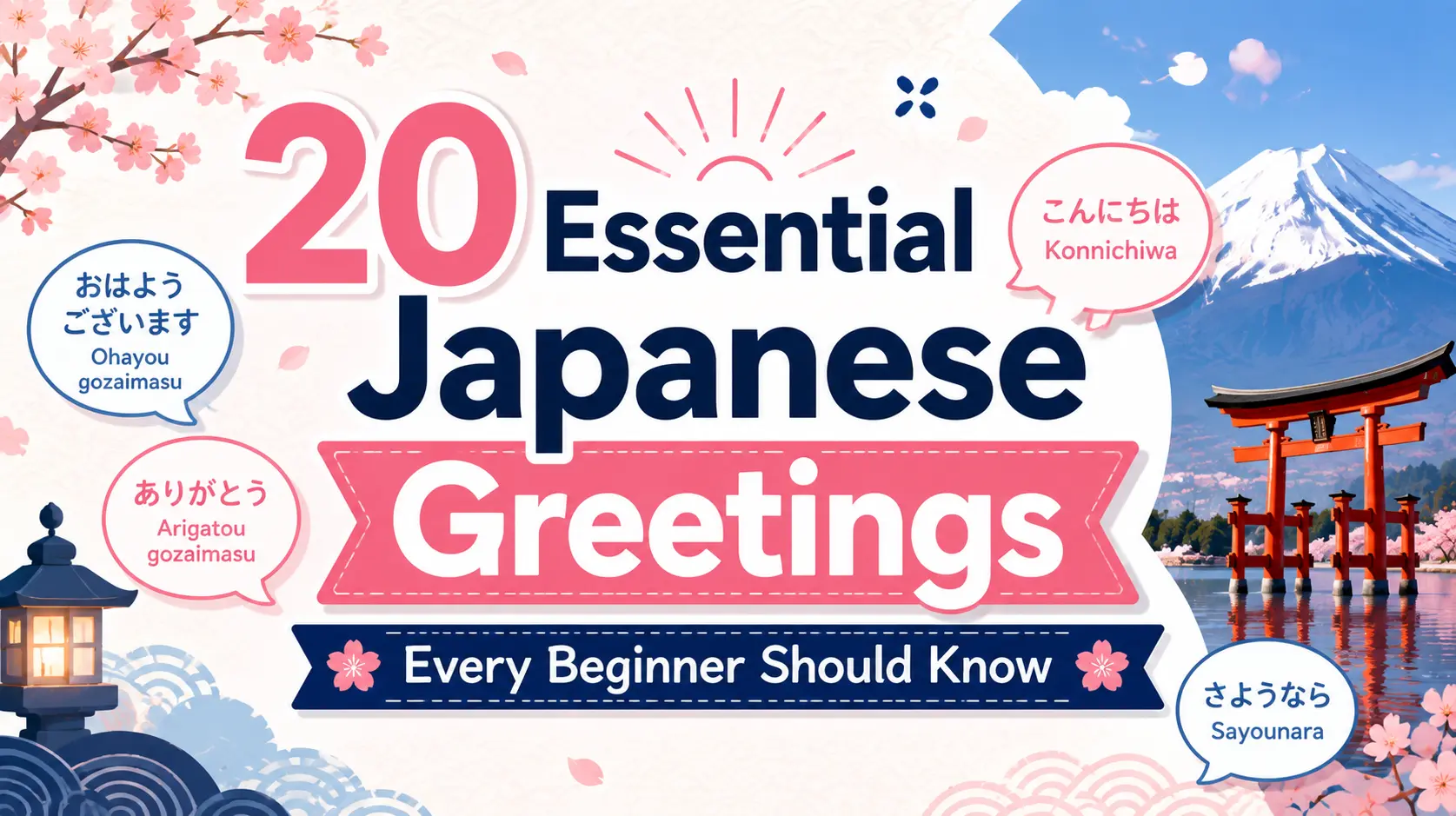
20 Essential Japanese Greetings Every Beginner Should Know
Learn the most useful Japanese greetings for daily life, travel, school, work, and first-time meetings. Each expression includes natural usage, pronunciation, and a practical example.
Table of Contents
- Introduction
- Understanding Japanese Greetings
-
20 Essential Japanese Greetings
- おはよう — Ohayō
- おはようございます — Ohayō gozaimasu
- こんにちは — Konnichiwa
- こんばんは — Konbanwa
- おやすみ — Oyasumi
- おやすみなさい — Oyasuminasai
- はじめまして — Hajimemashite
- よろしくお願いします — Yoroshiku onegaishimasu
- ありがとうございます — Arigatō gozaimasu
- どうも — Dōmo
- 久しぶり — Hisashiburi
- お久しぶりです — Ohisashiburi desu
- 元気? — Genki?
- お元気ですか — Ogenki desu ka
Introduction
Japanese greetings are among the most useful expressions a beginner can learn. Even if you only know a small amount of Japanese, using the right greeting can make your conversations feel warmer, more natural, and more respectful.
You will hear these phrases in homes, shops, schools, hotels, offices, and everyday conversations. Some are used according to the time of day, while others belong to specific situations such as leaving home, returning home, or meeting someone for the first time.
In this guide, you will learn 20 essential Japanese greetings, how to pronounce them, when to use them, and how native Japanese speakers use them in real life.
Understanding Japanese Greetings
Japanese greetings depend strongly on context. The expression you choose may change according to the time, setting, and level of politeness.
- Morning, daytime, and evening greetings are different.
- Casual expressions are common with friends and family.
- Polite forms are safer with teachers, coworkers, customers, and strangers.
- Some greetings come in pairs, such as いってきます and いってらっしゃい.
- Natural Japanese usage is often more important than a direct English translation.
Beginners should first focus on expressions such as おはようございます, こんにちは, こんばんは, ありがとうございます, and はじめまして.
20 Essential Japanese Greetings
The following expressions cover many of the most common situations beginners will encounter in daily Japanese.
1. おはよう
Meaning
Good morning
This is the most natural beginner-friendly translation. The exact nuance may change slightly depending on context.
Pronunciation
Ohayō